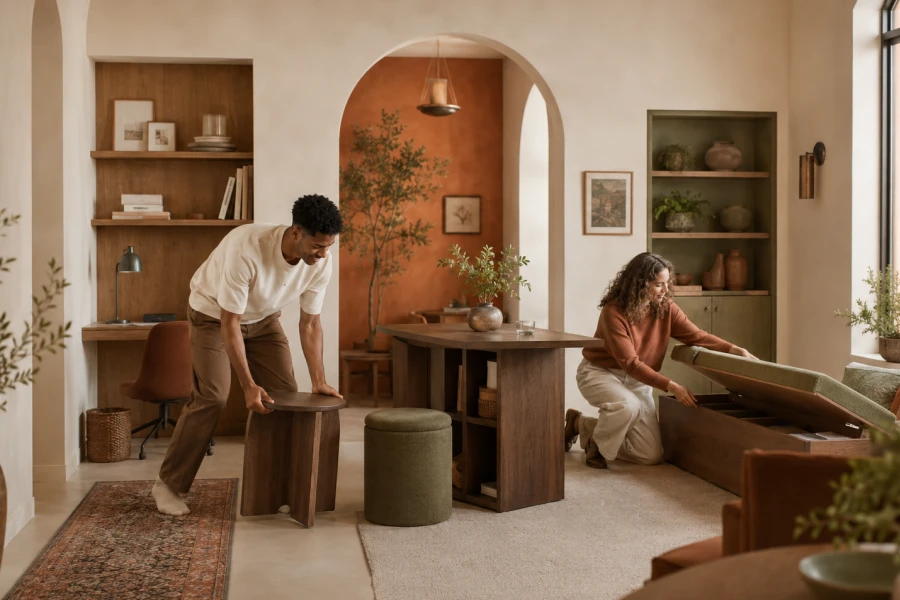
A flexible room needs furniture that understands real life. Multi-purpose room furniture ideas should help you work, rest, host, store, and reset without making the space feel crowded. Many homes cannot dedicate separate rooms to every activity. That does not mean the design must feel improvised. Smart pieces can create structure inside one shared footprint. A cabinet can hide office supplies. A sleeper sofa can welcome guests. A folding table can turn dinner into project time. When furniture is chosen with purpose, one room can support many routines gracefully.
Start with a simple room map before shopping. Mark doors, windows, outlets, radiators, and walking paths. Then write the activities the room must support. Place the most frequent activity first. Add secondary activities around it. This reveals which furniture needs to move and which can stay fixed. It also prevents overcrowding. A beautiful storage bench may still fail if it blocks a door. A flexible room layout begins with movement, access, and daily rhythm.
Tables do a lot of work in multi-purpose rooms. They support meals, laptops, games, crafts, homework, and folding laundry. Expandable tables offer flexibility without permanent bulk. Drop-leaf tables work beautifully against walls. Nesting tables can separate when guests arrive. A lift-top coffee table can create a work surface. Folding tables can disappear after occasional use. The key is comfort and stability. A table that wobbles will not get used. Measure the room in every configuration. Leave enough clearance for chairs, drawers, and foot traffic.
Hidden storage keeps flexible rooms visually calm. Storage ottomans can hold blankets, toys, or guest linens. Closed cabinets can hide work supplies after hours. Benches with compartments can serve entry, dining, or window areas. Beds with drawers can replace bulky dressers. Choose hidden storage based on what causes clutter most often. Do not store random items just because space exists. Assign each compartment a purpose. With smart furniture placement, storage becomes part of the room’s behavior.
Flexible seating helps a room shift quickly. Lightweight chairs, poufs, stools, and benches can support guests without crowding daily life. Choose pieces that look intentional when not in use. A bench can sit under a console. Poufs can tuck beside a sofa. Stools can become side tables. Dining chairs can double as desk chairs if they are comfortable enough. Avoid flimsy pieces that feel temporary. The room should not look like it is waiting for better furniture. Flexible seating can still feel polished, durable, and connected to the design.
Work and guest needs often compete in one room. A wall-mounted desk can close when visitors arrive. A secretary desk can hide papers. A sleeper sofa can replace a rarely used guest bed. A daybed can serve as seating and sleeping space. Use cabinets to separate work tools from guest supplies. Keep bedding in the same room if possible. Add lighting that works for both reading and computer tasks. A multi-functional furniture setup makes transitions smoother and less stressful.
Multi-purpose rooms often look messy because the furniture comes from unrelated needs. A desk looks corporate. A sofa looks casual. Storage looks utilitarian. The solution is visual consistency. Repeat wood tones, fabric colors, metal finishes, or rounded shapes. Choose storage that looks like furniture, not equipment. Use matching baskets or boxes sparingly. Keep cables hidden. Add textiles that connect zones. When pieces share a design language, the room feels intentional. It can work hard without announcing every job it performs.
The final test is reset time. A multi-purpose room should return to calm quickly. If it takes thirty minutes to change modes, the system is too complicated. Keep furniture easy to move. Store supplies near their activity. Limit objects on surfaces that need to transform. Use trays for items that must move together. Review what gets left out repeatedly. That clutter is giving you design feedback. Adjust storage or furniture placement accordingly. The best room does not just look flexible. It behaves flexibly, even on busy days.



Leave a comment