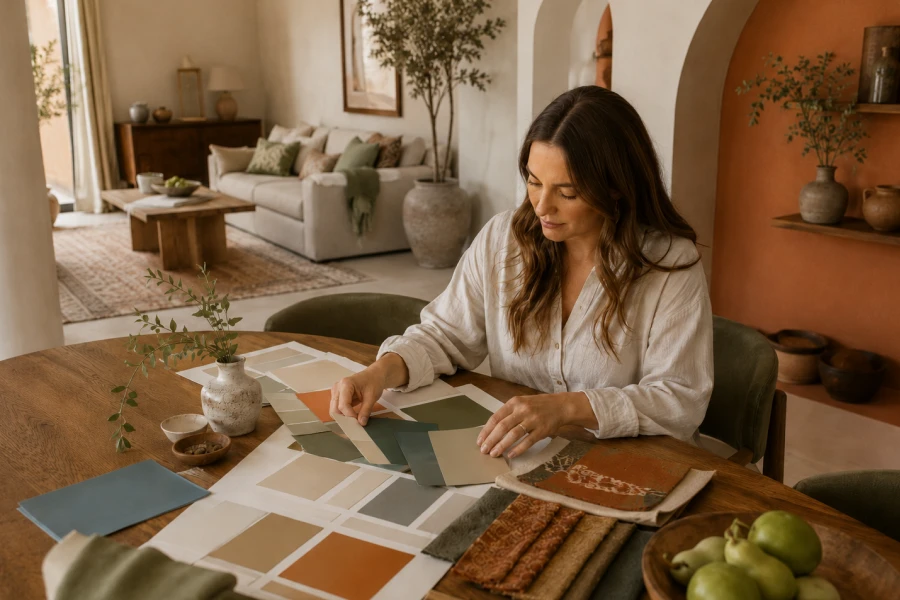
Choosing colors can feel exciting until every option starts looking wrong. AI color palette ideas help turn that chaos into a clearer creative process. They do not replace taste, light testing, or personal instinct. They simply help you organize the possibilities faster. A good prompt can compare warm neutrals, moody accents, soft contrast, and material pairings. It can also explain why one palette feels calm while another feels energetic. That makes decorating less reactive. You stop saving endless inspiration images without a plan. Instead, you begin shaping a room with purpose, mood, and confidence.
AI only works well when the request feels specific. Asking for pretty colors usually gives generic results. Asking for a calming palette for a north-facing bedroom with oak floors gives better direction. Include the room type, lighting, furniture colors, and desired emotion. Mention whether you prefer modern, cozy, organic, classic, or minimal spaces. Add materials like linen, marble, wood, rattan, or brass. Tell the tool what you want to avoid. That detail matters. A thoughtful prompt can lead to personalized color combinations instead of flat trend lists.
Many homeowners start by searching for color names. That can work, but it often skips the emotional goal. A room should support a feeling first. Calm, intimacy, freshness, focus, warmth, and brightness all lead to different choices. A serene bedroom may need muted depth, not plain white. A creative office may need contrast, not visual noise. A family living room may need durability and comfort. Once the mood is clear, colors become easier to judge. You can reject shades that do not serve the room. This makes the entire process feel cleaner.
Undertones create most decorating surprises. A gray may lean blue, green, purple, or beige. White can feel creamy, icy, chalky, or yellow. AI can help compare undertones before you buy samples. Ask it to explain how a shade might react with warm wood or cool tile. Request alternatives if your room has little natural light. Compare palettes for daytime and evening use. This will not replace seeing swatches in person. Still, it sharpens your first round of decisions. With a room color strategy, fewer options make it to the testing stage.
Your furniture should influence the palette from the beginning. A sofa, rug, bed frame, or cabinet can become the anchor. If you ignore those pieces, the room may feel disconnected. AI can create palettes around existing furniture colors. Describe the dominant pieces clearly. Include upholstery tone, wood finish, metal finish, and large textiles. Ask for wall, accent, trim, and decor color suggestions. Then ask for one safe option and one bolder option. This gives you range without losing control. Decorating feels easier when the room’s largest pieces guide the story.
Small rooms need careful palette choices. They do not always need white, despite popular advice. Sometimes a deeper color makes a small room feel intentional. Sometimes a tonal scheme makes boundaries disappear. AI can compare both approaches quickly. Ask for palettes that expand visually, cocoon gently, or create boutique-hotel drama. Request ceiling, trim, and door suggestions too. Those surfaces affect the final feeling. A small powder room may handle bold color beautifully. A small bedroom may need softer transitions. The key is choosing atmosphere, not blindly chasing brightness.
A digital palette can look perfect on screen and fail in real life. Materials prevent that mistake. Pair each color suggestion with wood, stone, fabric, and metal references. Ask AI how each palette works with your flooring. Request textile ideas that soften or strengthen the scheme. Compare matte and glossy finishes. Think about washable paints in busy rooms. Consider how natural fibers affect warmth. These details turn digital inspiration into a practical plan. A harmonious home palette works because every surface supports the same visual mood.
AI should narrow your choices, not make the final decision alone. Always test physical samples. View them on different walls. Check them in natural and artificial light. Place them beside flooring, curtains, and furniture. Watch how they look in the morning and evening. Eliminate anything that turns muddy, sharp, or dull. Keep notes so decisions stay objective. This final step protects your budget. It also protects your confidence. When your digital plan survives real-world testing, the room starts with a much stronger foundation.




Leave a comment