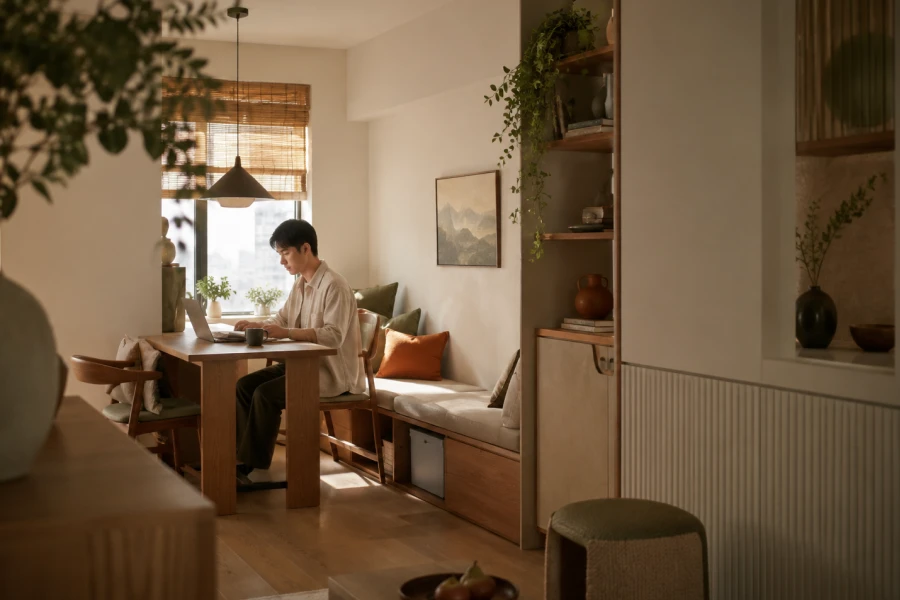
Small rooms can become stylish without becoming crowded. Interior styling for small spaces depends on restraint, scale, texture, and useful beauty. The goal is not to decorate every surface. The goal is to make the room feel finished while preserving movement. A small space needs visual pauses. It also needs personality. That balance can feel tricky. Too little decor feels bare. Too much decor feels chaotic. The answer is not removing all character. It is choosing fewer pieces with more presence, clearer purpose, and stronger connection to the way you live.
Scale affects comfort immediately. Furniture that is too large can block movement. Decor that is too tiny can create visual clutter. A small room often benefits from fewer medium-scale pieces. One generous mirror may work better than several small frames. One strong lamp may work better than scattered accessories. Measure walls, walkways, and furniture before styling. Leave space around important pieces. Let the eye move without interruption. A small room styling plan helps every detail feel chosen rather than squeezed in.
Negative space is not wasted space. It gives a room calm, clarity, and shape. Empty wall space can make art feel more important. A clear tabletop can make one vase feel sculptural. Open floor space can make furniture feel lighter. In small rooms, negative space protects comfort. It also makes cleaning easier. Resist filling every shelf. Leave gaps between objects. Let useful surfaces remain usable. This approach may feel simple, but it reads as intentional. A room with breathing room often feels more expensive than a room packed with decor.
Texture creates depth without taking much room. Linen curtains, woven baskets, wool throws, ceramic lamps, and wood trays add interest quietly. They also make neutral palettes feel warm. Texture is especially useful when color must stay restrained. A small room can handle layers when the palette remains connected. Mix rough, smooth, soft, and reflective finishes. Repeat materials in small ways. Avoid too many competing patterns. This keeps the space rich without feeling busy. With space-conscious decor ideas, touch matters as much as color.
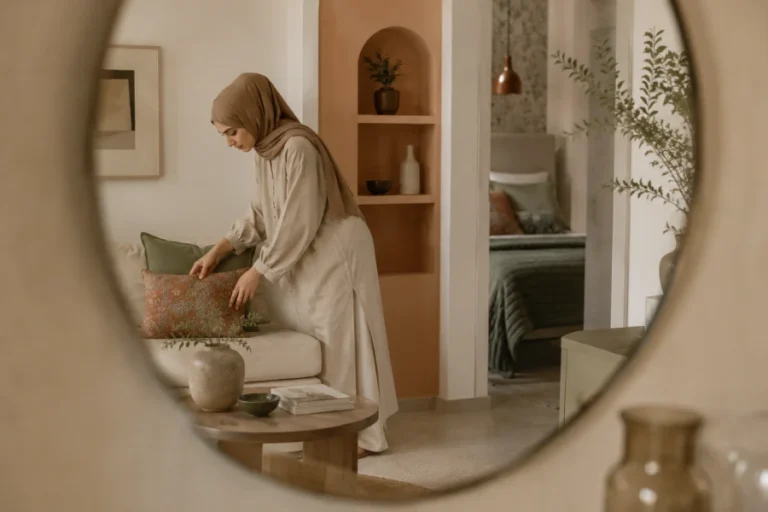
Mirrors can expand a room visually, but placement matters. Reflect windows, art, or calm surfaces when possible. Avoid reflecting clutter or awkward corners. Lighting also shapes the room’s scale. Multiple light sources feel softer than one harsh overhead fixture. Use lamps to create depth. Keep sightlines open from the doorway. Choose low or transparent pieces where space feels tight. These choices help the room feel layered rather than cramped. They also make small spaces more comfortable at night. Good styling considers how the room feels after sunset.
Beautiful styling fails when it interrupts routines. A tray should not block the table you use daily. Pillows should not make sitting annoying. Open shelves should not collect items you cannot maintain. Choose decor that supports living. A basket can hold blankets. A lamp can improve reading. A mirror can brighten a dark corner. A stool can become a side table. A functional decorating approach keeps beauty practical. Small spaces need style that works, not style that performs only for photos.
A small room needs one or two focal points, not ten. The focal point might be art, a sofa, a bed, a view, or a beautiful cabinet. Let supporting pieces stay quieter. This creates hierarchy. Without hierarchy, every object competes. A bold rug can work if the walls and furniture stay calm. A dramatic wall color can work if accessories are edited. A sculptural lamp can work if surrounding pieces give it space. Styling becomes easier when you know what should lead. Everything else can support that decision.
Styling is not finished when every item is placed. It is finished when the room feels settled. Step back from the doorway. Take a photo. Notice what looks crowded, lonely, or unrelated. Remove one item before adding another. Swap rather than pile. Repeat a color or material if something feels disconnected. Let the room sit for a day. Small spaces reveal problems quickly. They also reward careful editing. When each object has purpose and breathing room, the entire space feels more polished, calm, and livable.


Leave a comment