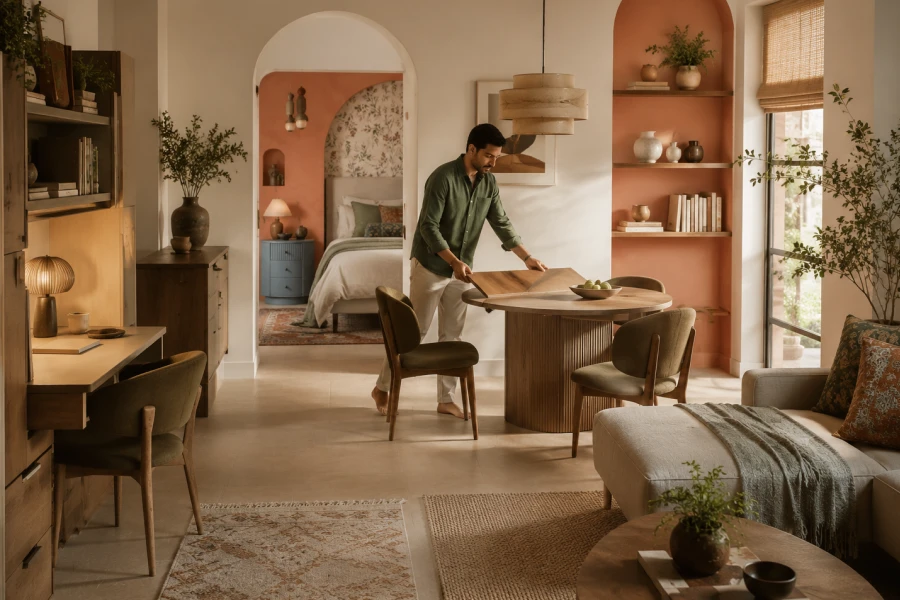
Apartment life teaches you to notice every inch. Small spaces apartment living becomes easier when furniture supports movement, storage, rest, work, and entertaining without crowding the room. The goal is not to make a small home pretend to be large. The goal is to make it feel clear, comfortable, and capable. Every piece should solve a real problem. Every corner should have a purpose. A tiny dining area can still feel inviting. A compact living room can still hold guests. With the right choices, a small apartment can feel beautifully efficient.
A small apartment cannot support every fantasy equally. Priorities make design decisions easier. Decide what matters most in your daily life. Maybe you need a real workspace. Maybe you cook often. Maybe hosting friends matters. Maybe storage matters more than a large sofa. Once priorities are clear, furniture choices become less confusing. You stop buying pieces because they look nice online. You start choosing pieces that solve specific pressure points. A compact home layout works when it reflects how you actually live.
Floor space is precious in apartments. Walls can carry more of the load. Tall bookcases, wall shelves, hanging rails, and mounted desks help free the room below. Vertical storage draws the eye upward. It can also make ceilings feel higher. Keep heavier storage visually calm. Match shelves to the wall when possible. Use closed boxes sparingly so open shelving does not become cluttered. Place daily items within easy reach. Store occasional items higher. This approach protects walkways and keeps rooms feeling lighter. The floor should not carry every responsibility.
Dual-purpose furniture is essential, but only when both purposes work well. A storage ottoman should be comfortable and useful. A sofa bed should be pleasant to sit on. A foldable table should feel stable when open. Avoid pieces that technically transform but feel annoying to use. Measure everything twice. Check door swings, chair clearance, and walking paths. Think about daily transitions. A dining table that folds away sounds perfect until it blocks a cabinet. With apartment furniture solutions, convenience matters as much as cleverness.
Small rooms feel calmer when large pieces share a quiet relationship. This does not mean everything must be white. It means scale and contrast need intention. Low-profile furniture can preserve sightlines. Leggy pieces reveal floor space. Rounded edges can ease tight circulation. Softer palettes can make storage blend into the room. One bold accent can create personality without clutter. Too many small items can feel busier than fewer larger pieces. Choose visual calm where the room already works hard. Let texture create interest instead of constant color changes.
Hidden storage gives small homes emotional relief. Beds with drawers, benches with lids, and cabinets with doors can hide necessary items. The key is organizing hidden storage carefully. Otherwise, it becomes a place where clutter disappears without being solved. Group items by activity. Label discreetly if helpful. Keep frequently used things near the front. Review storage before it overflows. A small apartment design system should make belongings easier to access, not harder to remember.
Zones make apartment living feel more organized. A rug can define the living area. A narrow table can create a work edge. Curtains can soften a sleeping corner. Lighting can separate tasks. Bookshelves can divide space while adding storage. Keep partitions light when the apartment needs openness. Avoid blocking windows unless privacy requires it. The goal is psychological separation. You want the room to shift modes without feeling chopped apart. Good zoning helps you work, rest, eat, and host in the same footprint.
Small spaces need regular editing. That does not mean constant minimalism. It means noticing when belongings exceed the apartment’s capacity. Review seasonal decor, clothing, kitchen tools, and hobby supplies often. Remove duplicates. Donate items that no longer fit your routines. Avoid storing things only because they were expensive. Keep surfaces as open as possible. Let empty space become part of the design. The apartment will feel better when it can breathe. Comfort comes from usefulness, not from owning every possible solution.


Leave a comment